

Spain to India: Comparing Agro-Tourism Experiences
Introduction: The Global Rise of Agro-Tourism
Across the world, travellers are moving away from crowded tourist destinations and looking for experiences that feel more authentic, sustainable, and connected to local culture. This shift has led to the rapid growth of agro tourism world experiences, where farms, villages, and rural communities become important travel destinations. From olive farms in Spain to rice fields and coconut plantations in India’s Konkan region, agro-tourism allows travellers to experience how people live, farm, cook, and connect with nature. Although every country offers unique rural experiences, the core idea remains the same — creating meaningful travel experiences rooted in agriculture, local traditions, and sustainable living. At Krushi Pandhari, we often see international travellers comparing their rural tourism experiences across countries. Spain and India, despite their cultural differences, share many similarities when it comes to farm-based tourism and slow travel experiences.What Is Agro-Tourism?
Agro-tourism refers to travel experiences connected to farms, agriculture, village life, and rural culture. Popular agro-tourism activities include:- Farm stays
- Organic farming experiences
- Local food tasting
- Vineyard visits
- Village tourism
- Seasonal harvest participation
- Nature-based travel
Agro-Tourism in Spain: Rustic Charm and Culinary Heritage
Spain is one of Europe’s most popular rural tourism destinations. Travellers visiting Spanish countryside regions often experience:- Olive farms
- Vineyards
- Cheese-making traditions
- Rural guesthouses
- Organic farming
- Slow food culture
- Wine tourism
- Culinary experiences
- Heritage villages
- Mediterranean farming traditions
- Farm-fresh produce
- Traditional regional recipes
- Locally made olive oil
- Seasonal ingredients
Agro-Tourism in India: A Deeply Cultural Experience
In India, agro-tourism often feels more immersive and community-oriented. Farm stays in regions like Konkan allow travellers to experience:- Village life
- Traditional cooking
- Rice farming
- Coconut harvesting
- Local festivals
- Sustainable farming
- Family-style hospitality
- Farm walks
- Traditional Konkani meals
- Village interactions
- Seasonal farming activities
- Nature-based experiences
Comparing Farm Tourism Experiences
A farm tourism comparison between Spain and India reveals both similarities and unique regional differences.Similarities
Both destinations offer:- Nature-focused travel
- Farm-to-table dining
- Slow travel experiences
- Sustainable tourism
- Local hospitality
- Seasonal food culture
Differences
Spain
- Vineyard and wine tourism focus
- Mediterranean cuisine
- Historic countryside villages
- Structured rural tourism infrastructure
India
- Village culture immersion
- Diverse regional food traditions
- Agricultural participation
- Community-driven hospitality
- Spiritual and cultural experiences
Food as the Heart of Agro-Tourism
One of the strongest connections between Spain and India’s agro-tourism culture is food. In Spain, meals often celebrate:- Olive oil
- Cheese
- Bread
- Wine
- Seasonal vegetables
- Coconut
- Rice
- Seafood
- Kokum
- Seasonal produce
- Village cooking methods
Rural Tourism Abroad vs India
Travellers comparing rural tourism abroad with Indian rural experiences often notice differences in pace and social interaction. In many European destinations, rural tourism focuses heavily on:- Scenic relaxation
- Countryside stays
- Culinary tourism
- Strong community interaction
- Cultural storytelling
- Family-style hospitality
- Participation in daily village life
Sustainability and Slow Travel
The rise of global agro tourism is closely linked to sustainable and responsible travel trends. Travellers increasingly want:- Eco-friendly stays
- Local sourcing
- Cultural authenticity
- Community-based tourism
- Reduced environmental impact
- Farm-to-table food
- Organic farming
- Traditional cooking
- Local employment
- Nature preservation
Why International Travellers Appreciate Konkan Farm Stays
Foreign travellers visiting Konkan often compare the region to rural destinations in Europe because of its:- Scenic countryside
- Coastal landscapes
- Agricultural culture
- Relaxed atmosphere
- Slow lifestyle
- Traditional Konkani cuisine
- Village hospitality
- Cultural diversity
- Tropical biodiversity
- Seasonal festivals
The Future of Agro-Tourism Worldwide
As travellers continue seeking authentic and sustainable experiences, agro-tourism will likely become one of the fastest-growing travel sectors globally. The future of agro tourism world experiences will focus on:- Cultural preservation
- Sustainable farming
- Eco-tourism
- Slow travel
- Local food systems
- Community engagement
Conclusion
From Spain’s vineyards and olive farms to Konkan’s rice fields and coastal villages, agro-tourism experiences around the world share a common purpose — reconnecting travellers with nature, food, culture, and slower ways of living. This farm tourism comparison highlights how both Spain and India offer unique but equally enriching rural travel experiences shaped by their traditions, landscapes, and communities. At Krushi Pandhari, we believe agro-tourism is not just about staying on a farm — it is about understanding how people live, grow food, preserve traditions, and remain connected to the land. For travellers exploring the future of meaningful travel, Konkan stands proudly alongside some of the world’s most authentic rural tourism destinations.Frequently Asked Questions (FAQs)
1. What is agro-tourism?
Agro-tourism involves travel experiences connected to farms, agriculture, village life, local food, and rural culture.2. How does agro-tourism in India differ from Spain?
India focuses more on cultural immersion and village experiences, while Spain often emphasises vineyards, culinary tourism, and countryside retreats.3. Why is global agro tourism becoming popular?
Travellers increasingly seek authentic, sustainable, nature-based, and community-focused travel experiences beyond commercial tourism.4. What makes Konkan unique for agro-tourism?
Konkan offers farm stays, coastal landscapes, traditional Konkani cuisine, village life, biodiversity, and authentic rural hospitality.5. Why is experiential travel comparison important for travellers?
Comparing travel styles helps travellers choose experiences that best match their interests in culture, food, sustainability, and local interaction.
All Categories
Recent Posts
inyashus0 Comments
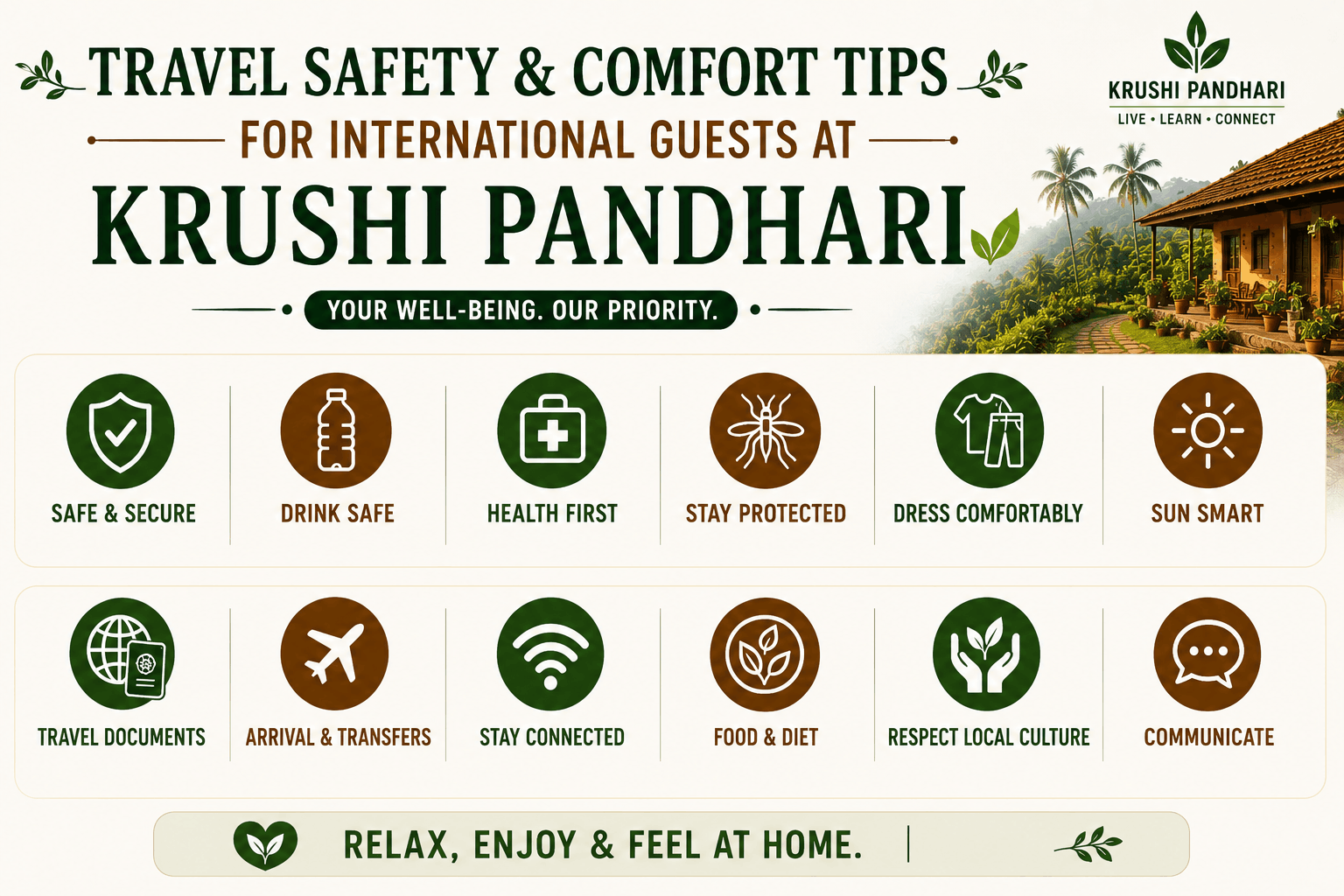
Travel Safety & Comfort Tips for International Guests at Krushi Pandhari
inyashus0 Comments
Cultural Immersion for First-Time Visitors to India
inyashus0 Comments
What Makes Konkan’s Eco-Tourism Unique
Ready for a True Rural Escape?
Book your visit today or contact us for
customized packages.